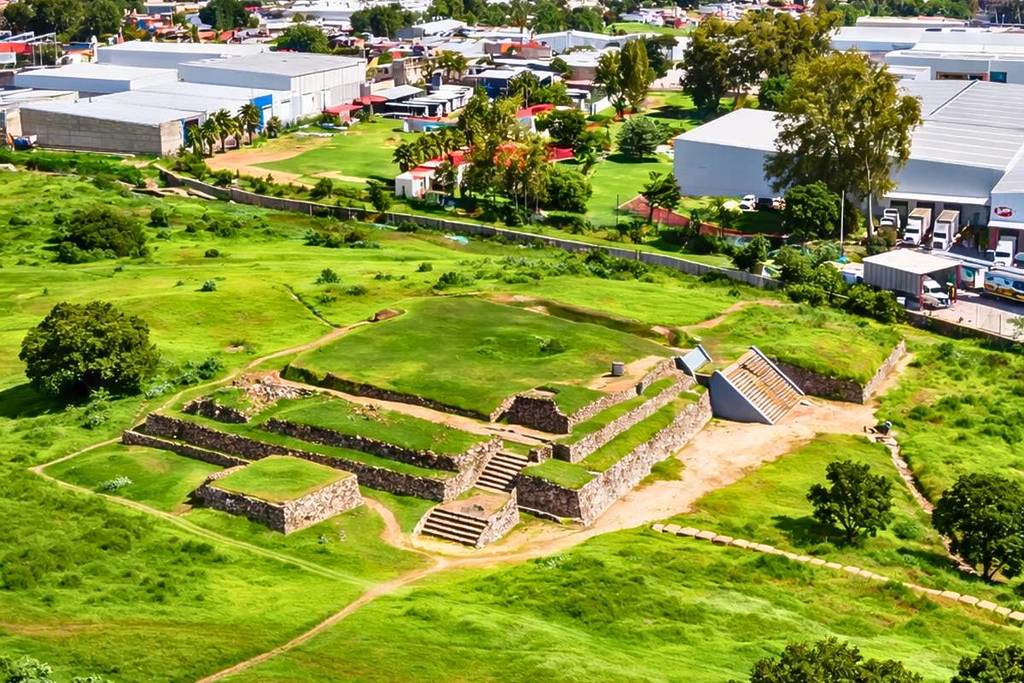

Today it is surrounded by avenues and traffic, but more than 1,500 years ago it was the most important spiritual and administrative center of the Atemajac Valley. This is the El Ixtépete archaeological site in Zapopan!
At the intersection of Periférico Sur and Avenida Mariano Otero are these pre-Hispanic ruins whose history is worth knowing. Here we share some facts about them and how to visit them.
3 facts about the El Ixtépete archaeological site
1. Its shape resembles the pyramids of Teotihuacan
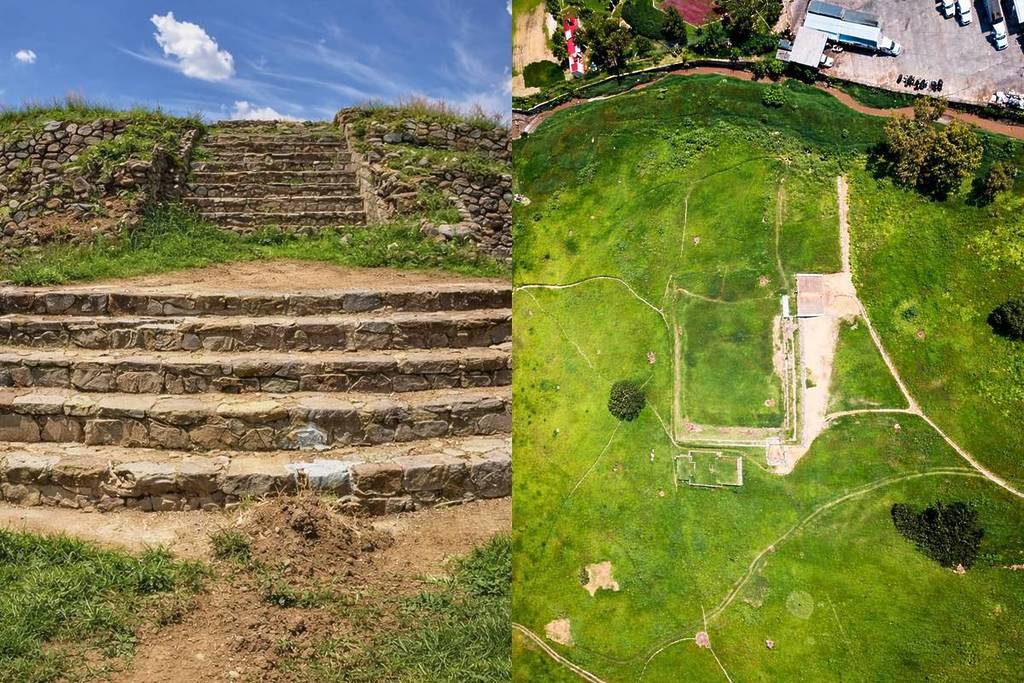
The first thing that surprises visitors about El Ixtépete is its architecture. Unlike the circular structures of the Guachimontones, here you will find rectangular shapes and a system known as talud-tablero: a sloping wall crowned by a vertical board.
This style is characteristic of Teotihuacan, indicating that there was a cultural or commercial relationship between the two regions. In other words, western Mexico was not isolated: it was part of a much broader network of exchange.
2. It was built in stages
The main pyramid we see today was not built in one go. Archaeologists have identified at least seven superimpositions.
Every so often—possibly every 52 years, in relation to cycles of the Mesoamerican calendar—a new structure was built on top of the previous one, expanding and raising it.
Currently, the base measures approximately 20 meters per side and reaches a visible height of about 6 meters, although in its heyday it must have been more imposing.
3. It was a ceremonial and administrative center
The site was inhabited between 450 and 900 AD. It was not a typical city: it functioned mainly as a ceremonial and administrative center.
The population lived in the surrounding area, and their houses were made of perishable materials, which is why they did not survive. Rituals, ceremonies, possible sacrifices, and astronomical observations were performed on the stone platforms.
What you should know before you go
The spring equinox is its busiest time. Every March 21, hundreds of people come dressed in white to “receive energy” and connect spiritually with the site.
📍 Location: Periférico Sur and Mariano Otero, Zapopan
🎟️ Access: Free admission
🌿 Type of visit: Open park without tourist infrastructure
Read more about this site by the INAH.